
Share Laurence Hiley Smith Coderre's obituary with others.
Invite friends and family to read the obituary and add memories.
Stay updated
We'll notify you when service details or new memories are added.
You're now following this obituary
We'll email you when there are updates.
Select your format and elements to print

IN LOVING MEMORY OF Laurence Hiley Smith Coderre
Laurence Hiley
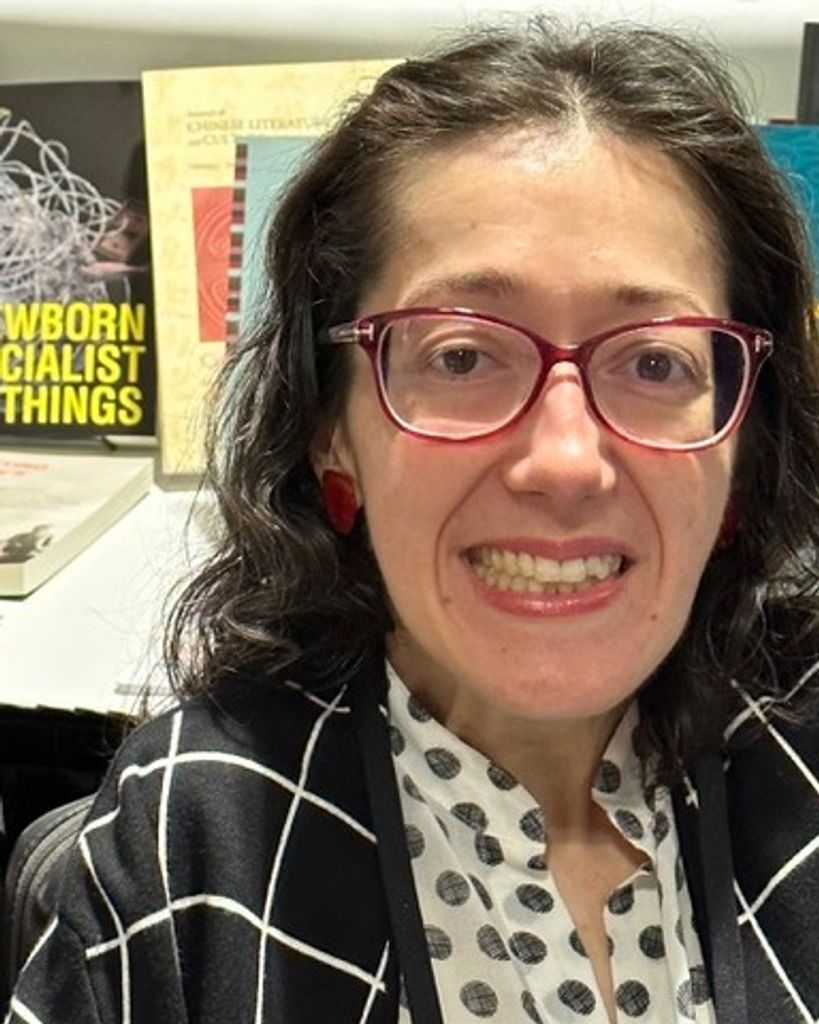
Smith Coderre
Jul 30, 1984 — Jan 8, 2026
Manhattan, New York
Laurence Hiley Smith Coderre's Obituary
It is with deep sadness that we announce the passing of Dr. Laurence Coderre. Laurence died peacefully on January 8, 2026, at home in Binghamton, NY with her parents by her side. She was 41 years old. The cause was complications of a congenital hypomyelinating neuropathy.
Laurence Coderre was born on July 30, 1984 at BMP Hospital in Cowansville, Québec, the only child of Shirley Smith and Jacques Coderre. Precocious, Laurence started off bilingual in her native French and English and would eventually master Chinese, Russian, and Spanish. She attended Knowlton Academy, where she participated in public speaking, math contests, and science fairs. She attempted violin and piano, was a Brownie and a Girl Guide, and won prizes at the Brome County Fair for her cross-stitch. Laurence acted in several Echo Art productions at Theatre Lac-Brome, where, for one of them, she also ran the lighting board. She studied university math for kids at Explorations Summer Camp at McGill University.
Au secondaire, Laurence transféra au Mont Sacré Coeur. La grammaire française ne l’a pas ralentie. Unexpectedly, but up for an adventure, the family moved to Binghamton, NY, in 1999, where Laurence attended Binghamton High School. She was awarded a full International Baccalaureate diploma and graduated salutatorian of her class. While there, she participated in Mock Trial, Youth Court, Debate, and was a member of Honor Society. She sang in Chorus and Concert Choir and attended several choral festivals.
Laurence took a gap year after high school during which she studied for and took The Royal Conservatory of Music exams in Rudiments, History, and Harmony. The family spent three months in Hong Kong and traveled to mainland China, Macau, Korea, Malaysia, Singapore, Vietnam, and Thailand.
Laurence then went to Harvard College, where she graduated magna cum laude with concentrations in Music and East Asian Studies in 2007 and was inducted into Phi Beta Kappa. Though her love of music – and her aptitude for it – were longstanding, she arrived at Harvard thinking she would study theoretical mathematics. Wandering through the concentration fair, however, she found her people in the Music department and never looked back. She auditioned and became a member of The Radcliffe Choral Society and sang all four years. She toured with them to South Africa, Georgia, England, and the Pacific Northwest. Laurence also wrote a column in the Harvard Independent starting as a rising freshman. She wrote about everything from Harvard cynics, social sanity, religion, movies, and college admission services to friendships, coupling, and friends coming out.
As for East Asian Studies, it was during her gap year that she became fascinated by a world completely new to her, brimming with unfamiliar tastes, sounds, and things. She would dedicate her career to making sense of the trajectory those unfamiliar things had taken over the tumultuous past half century, from the socialist transformations of the 1950s to the present. Her MA thesis on film versions of the model operas of the Cultural Revolution, completed at Harvard’s Regional Studies-East Asia program in 2009, dissected those operas with her interdisciplinary chops to show how – contrary to previous assessments that wrote them off as mere propaganda – they functioned as multi-platform marketing of socialist commodity culture.
Laurence completed a Ph.D. in Chinese under Prof. Andrew Jones at the University of California, Berkeley, in 2015. In her very first year of graduate school, Laurence began contributing to conversations in her field, when she published an analysis of a 1970s feature film produced under the auspices of the Gang of Four in The Journal of Chinese Cinemas. Her dissertation, “Socialist Commodities: Consuming Yangbanxi in the Cultural Revolution,” engaged with material culture studies to make the case that things mattered in socialist China in ways no one had acknowledged before. In it, she invites us to look anew at such things as turntables, porcelain statuettes, amateur bodies, and vanity mirrors, and she shows how those things constituted critical components of “actually existing” Chinese socialism through which revolutionary subjects produced themselves. The significance of this project to the field lies in the fact that consumption of “socialist commodities” was central to subject formation well before post-Mao marketization.
Laurence’s promise was widely recognized early on: she received every major national fellowship out there for her dissertation project, including an International Dissertation Research Fellowship from the Social Science Research Council, a Fulbright-Hays Doctoral Dissertation Research Abroad Fellowship, and a Mellon/ACLS Dissertation Completion Fellowship. With that support, she undertook extensive research in China, combing the archives of artifacts from the Cultural Revolution at the Jianchuan Museum Cluster in Sichuan province and exploring the production site of the porcelain statuettes, Jingdezhen, as well as visiting archives and libraries in Hong Kong, Chengdu, Wuhan, Shanghai, and Beijing. As she held those objects in her hands and amassed a personal collection of them, she sought answers to the question of how they mattered to people as things they encountered in their day-to-day lives. Laurence made her mark at Berkeley, in the words of Prof. Jones, as “a luminous, fiercely intelligent scholar and teacher. She was a wise, funny, and indomitable human being.”
Laurence completed her dissertation as a fellow at the Townsend Center for the Humanities, where she contributed to lively weekly conversations in an interdisciplinary setting. It was also at Berkeley that she began to impart her accumulated wisdom to students, and her skill, generosity, and creativity as a teacher were recognized at that early stage with a university-wide Outstanding Graduate Student Instructor Award.
As a newly minted Ph.D., Laurence received a postdoctoral fellowship at the Lieberthal-Rogel Center for Chinese Studies at the University of Michigan, Ann Arbor in 2015. She then joined the East Asian Studies Department at New York University in 2016. She spent her postdoctoral year and the early years on the tenure track revising her dissertation into what would become her monograph, Newborn Socialist Things: Materiality in Maoist China (Duke, 2021), which received the distinction of an honorable mention from the Modern Language Association’s First Book Prize. That work has been celebrated for its rigorous investigation of Mao-period culture using tools forged in thing theory and material culture studies, where the “newborn socialist things” of the title were heralded as signposts for a future utopia. Laurence asks her readers to fully rethink the history of Chinese socialism, and she persuades us to do so through a series of case studies, each of which demonstrates how production, circulation, and consumption actually worked during the Mao period. Reviewing this book in the Journal of Asian Studies, Jennifer Altehenger writes, “Newborn Socialist Things is a tour de force: fascinating, inspiring, and challenging. It is a must-read for anyone interested in socialist (and postsocialist) China, its material culture, and its materiality.”
Laurence was promoted to Associate Professor with tenure at New York University in 2022, where she served as Director of Undergraduate Studies and Director of Graduate Studies in the Department of East Asian Studies. She also served as a member of the Undergraduate Curriculum Committee at the Faculty of Arts and Science. As an advisor and mentor of PhD students, Laurence was equal parts demanding and generous, and her department attests that “her teaching was known for its depth and rigor, and students valued her clarity, generosity of spirit, and commitment to thoughtful discussion.” With tenure secured, Laurence began thinking about university administration, and she was among a select group of faculty identified as possessing leadership potential chosen to take part in the NYU Arts and Science Emerging Leaders Academy in 2025-2026.
Laurence was working on a second monograph under the title Socialist Horizons: Everyday Revolution in the Mao Era. With that project, she aimed to examine the constant tension she observed between the material experiences of everyday life and the anticipatory nature of continuous revolution. She thought of this tension as a problem of time, as official theoretical discourse – which looked to a utopian future – had to come to terms with the everyday materialities of the socialist present. “Vernacularization” was the name she gave to the processes through which it did so. Ultimately, she hoped this project would prompt a reconsideration of the relationship between things and ideas in the analysis of culture.
In October 2025, Laurence began to write about her disability. In the preface to that unfinished work, she explains, “The idea of writing a memoir has lurked on the edges of my consciousness for years—since well before I had lived much at all, to be honest—but it was really only in the summer of 2025 that the idea demanded my undivided attention as a fully formed thought. Once it did so, it would not go away. It refused to leave me alone, and in quiet moments, passages of what would become this text began spooling out of me, unbidden, into the ether. I found I could not think of anything else, let alone write anything else, as my day job in academia requires, until I had written this. So I did.” A few pages later, she begins to work through the topic: “I was born with a fluke genetic mutation, the effects of which have so fundamentally shaped my experience of the world, physically, socially, and culturally, that I can scarcely distinguish myself as a person from the fact. It has taken me decades of soul-searching to arrive at this conclusion; I am still trying to get to a place, emotionally, where I can articulate it without a profound sense of discomfort. Dwelling on such things––on the ways I am my disability and it is me––is typically something I avoid at all costs.” Upon arrival at NYU, Laurence had begun working on issues of disability justice. She became a member of the Disabilities, Inclusion and Accessibility Provostial Working Group, which advised the Provost on ways the university could be made more welcoming to faculty, staff, and students with disabilities, including how to make NYU’s campus infrastructure more inclusive. During the spring semester of 2024, she designed and taught a new graduate seminar titled “Disability in/and China,” and she began toying with the idea of a third project on the representation of disability during the Mao period.
Laurence knew all the dialogue to every episode of Buffy the Vampire Slayer. She liked fantasy novels: The Chronicles of Narnia, A Wrinkle in Time, Harry Potter. Eddie Izzard made her laugh. She started following tennis while visiting her grandfather in the VA hospital, becoming an avid Roger Federer fan. She watched the Montreal Canadiens hockey games with her father. Weekly writing group meetings on a virtual beach sustained her. She taught herself photography so she could document her research. While in graduate school, Laurence started doing the New York Times crossword. She did it daily and was proud of her consecutive streak: 1,415 days. (It would have been longer if not for a software update at the Times that caused her to lose her spot on the leaderboard.)
Laurence had grit. She approached her work and her life with focus and dedication, honed by a competitive edge. Her work is characterized by an openness to the world, as initial sparks of curiosity would shift to patient and intense scrutiny. She was committed to fair but honest critique that evinced deep engagement with the work of others. Her quick wit and good humor lightened the tenor of a room, but also deepened a sense of camaraderie. She was thoughtful, kind, and fiercely committed to those she loved. Her Grade 3 teacher, Mr. Rzyzora, described her as “spunky and frisky.” A friend remembered the angles of her personality on Facebook like this: “Classic Laurence: ready to rib you, even in public, and the result was collective hilarity, because her sense of irony was always founded in a deep sense of comradeship and love.” The combination of these qualities in Laurence was part inherent, part hard-earned. To wit, her kindergarten teacher, Mrs. Prosser, wrote this series of comments on her report cards: Term 1, “Please see me, concerning her mark in ‘relationship with others.’” Term 2, “Laurence has tried to be more patient with her peers and as a result all parties concerned are much happier.” Term 3, “Laurence is more easy going and more able to ‘roll with the punches.’” Term 4, “Laurence, our Kindergarten class was enriched by your presence. We laughed a lot and shed a few tears together; it wasn’t easy for you at times, but you did it!”
Laurence is survived by her parents, Jacques and Shirley, an aunt and uncle, cousins, extended family, and her many loving friends, teachers, colleagues, and students. She also leaves behind her beloved English Labrador Retriever, Ruth Bader Ginsbark (Ruthie). Laurence will be sorely missed.
The celebration will be streamed via Zoom here: https://nyu.zoom.us/j/97344056511
We recommend that you ensure that you are able to access the event page in advance. The event page reads “Celebrating the Life of Laurence Coderre” across the top and features an image of a blue island.
If you are having trouble accessing the event page after following these steps, please contact Jennifer Bae at jb8262@nyu.edu
In lieu of flowers, Laurence’s wish was that donations be made in her name to Planned Parenthood or a charity of your choice.
Consider a donation, as requested by the family.

Funeral Services for Laurence Hiley Smith Coderre
Visitation with Family

Thursday
Hemmerdinger Hall at New York University
7:00 - 7:30 pm (Eastern time)
Celebration of Life
Thursday
Hemmerdinger Hall at New York University
7:30 - 9:00 pm (Eastern time)
A celebration of Laurence’s life will be held at 7:30 p.m. EST on January 29, 2026 in Hemmerdinger Hall at New York University, 100 Washington Square East, in New York City. Laurence’s family will be present from 7:00 p.m. to receive condolences.
To attend in person, please RSVP at https://tinyurl.com/2wd4wnpv as NYU requires registration to obtain entry to the venue.
To view the livestream 7:30 pm, January 29, 2026 please use the link located in the final paragraphs of the obituary.
Laurence Hiley Smith Coderre's Guestbook
Visits: 2716
This site is protected by reCAPTCHA and the
Google Privacy Policy and Terms of Service apply.
Service map data © OpenStreetMap contributors